 Skip to content
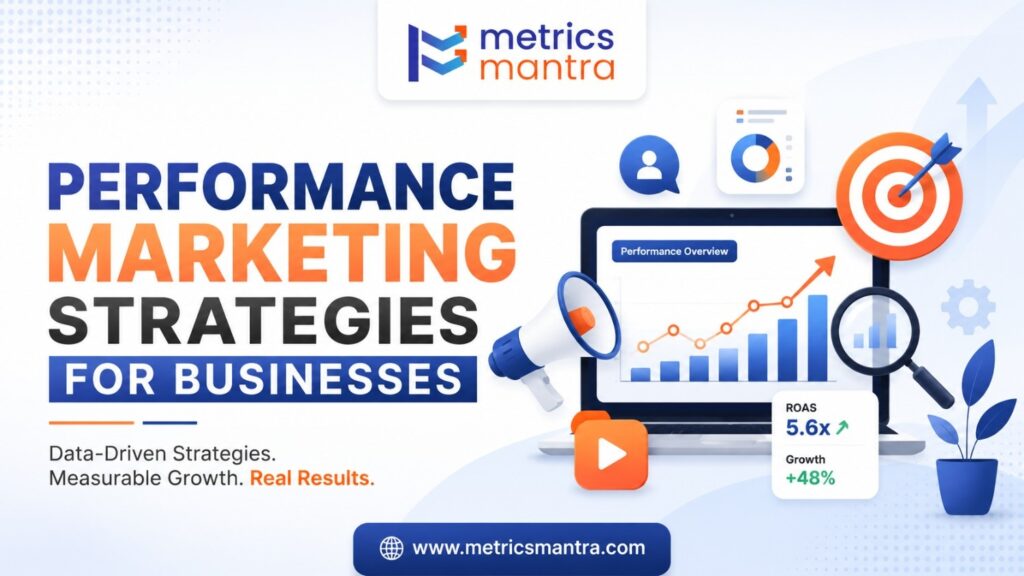
In today’s competitive online market, businesses need smarter ways to generate leads and increase sales. That is why many brands are using performance marketing strategies for businesses to reach the right audience and get better ROI. Unlike traditional marketing, performance marketing helps track real results like clicks, leads, and conversions.
In this blog, you will learn powerful and easy-to-understand performance marketing strategies that can help businesses grow faster in 2026. From Google Ads and SEO to social media marketing and lead generation, this guide will help you improve your online presence and boost business growth.
What is Performance Marketing?
Performance marketing is a digital marketing strategy where businesses pay only when a specific action happens, such as a click, lead, sale, app install, or conversion. Unlike traditional advertising, performance marketing focuses on measurable results, making it one of the most effective ways to grow a business online.
In simple words, performance marketing strategies for businesses help companies spend their marketing budget more wisely by targeting the right audience and tracking real-time performance. Popular channels used in performance marketing include Google Ads, Facebook Ads, Instagram Ads, SEO, affiliate marketing, and digital advertising campaigns.
How Does Performance Marketing Work?
Performance marketing works by using data and analytics to measure campaign success. Businesses create ads on digital platforms and pay based on results instead of estimated reach.
For example:
- Pay Per Click (PPC): Pay only when someone clicks the ad
- Cost Per Lead (CPL): Pay when a user submits a form
- Cost Per Sale (CPS): Pay only after a successful purchase
This approach helps businesses improve ROI, generate quality leads, and increase sales more effectively.
Key Benefits of Performance Marketing
- Better return on investment (ROI)
- Real-time campaign tracking
- Targeted audience reach
- Increased lead generation
- Budget-friendly marketing strategy
- Easy performance measurement
Why Performance Marketing is Important for Businesses in 2026
In 2026, online competition is growing faster than ever, and businesses can no longer depend only on traditional advertising methods. Customers now search, compare, and buy products online, which makes performance marketing strategies for businesses more important for generating leads, increasing sales, and improving ROI. Unlike traditional marketing, performance marketing allows businesses to pay for actual results such as clicks, conversions, or leads.
Better ROI and Measurable Results
One of the biggest benefits of performance marketing is that businesses can track every campaign in real time. Platforms like Google Ads, Meta Ads, and SEO tools help companies measure clicks, leads, conversions, and customer behavior. This helps businesses invest their marketing budget more wisely.
AI and Automation are changing digital marketing.
AI-powered tools are making digital marketing smarter and faster. Businesses can now automate ads, target the right audience, and optimize campaigns for better performance. This helps improve lead generation and reduce unnecessary ad spending.
Customers Expect Personalized Experiences
Modern customers prefer personalized ads and relevant content. Performance marketing helps businesses show the right ads to the right people based on their interests, location, and online activity. This improves engagement and conversion rates.
Local Businesses Need Strong Online Visibility
In cities like Varanasi, local businesses are increasingly using SEO, Google Ads, and social media marketing to attract nearby customers. A strong digital marketing strategy helps businesses compete locally and build trust online.
Data-Driven Marketing Improves Business Growth
Performance marketing is based on real data, not guesswork. Businesses can analyze campaign performance, identify what works best, and improve their marketing strategies continuously for long-term growth.
Top Performance Marketing Strategies for Businesses
Using the right performance marketing strategies for businesses can help increase website traffic, generate quality leads, and improve sales. A successful strategy focuses on reaching the right audience, tracking results, and optimizing campaigns for better ROI. Below are some of the most effective digital marketing strategies businesses should use in 2026.
1. Google Ads for High-Intent Leads
Google Ads is one of the best ways to target people who are already searching for your products or services. Businesses can run search ads, display ads, and Performance Max campaigns to increase conversions quickly. Using the right keywords, ad copy, and bidding strategy can improve ROI and reduce ad costs.
2. Social Media Advertising
Platforms like Facebook, Instagram, and LinkedIn help businesses reach a larger audience through paid advertising. Social media marketing works best for brand awareness, lead generation, and retargeting campaigns. Creating engaging creatives and targeting the right audience can improve campaign performance.
3. SEO and Content Marketing
Search Engine Optimization (SEO) helps businesses get long-term organic traffic from Google. Writing informative blogs, optimizing keywords, improving website speed, and using local SEO strategies can increase online visibility. Combining SEO with performance marketing creates a strong digital growth strategy.
4. Conversion Rate Optimization (CRO)
Getting traffic is important, but converting visitors into customers matters more. CRO focuses on improving landing pages, call-to-action buttons, website design, and user experience to increase conversions. A well-optimized landing page can significantly improve lead generation results.
5. Retargeting and Remarketing
Many users visit a website without taking action. Retargeting ads help businesses reconnect with those visitors through Google Ads and social media platforms. This strategy increases brand recall and improves conversion rates by targeting interested users again.
6. AI and Data-Driven Marketing
Modern businesses now use AI-powered tools to analyze customer behavior, automate campaigns, and improve ad targeting. Data-driven performance marketing helps brands make smarter decisions and achieve better results with lower marketing costs.
Best Performance Marketing Channels for Businesses
Choosing the right platform is one of the most important parts of successful performance marketing strategies for businesses. Every marketing channel works differently and helps businesses achieve specific goals like lead generation, brand awareness, website traffic, or sales. Using the right mix of channels can improve ROI and help businesses grow faster.
Google Ads
Google Ads is one of the most effective performance marketing platforms because it targets users who are already searching for products or services. Businesses can run Search Ads, Display Ads, and Performance Max campaigns to generate high-quality leads and conversions quickly.
Best For:
- Lead generation
- Local businesses
- High-intent customers
- Website traffic
Facebook & Instagram Ads
Meta Ads help businesses reach targeted audiences based on interests, age, location, and online behavior. These platforms are excellent for brand awareness, retargeting, and customer engagement.
Best For:
- Social media marketing
- E-commerce sales
- Brand visibility
- Retargeting campaigns
SEO (Search Engine Optimization)
SEO is a long-term digital marketing strategy that helps websites rank higher on Google organically. Combining SEO with paid advertising can lower customer acquisition costs and improve online visibility.
Best For:
- Organic traffic
- Local SEO
- Long-term business growth
- Website authority
YouTube Ads
Video marketing is growing rapidly in India, making YouTube Ads a powerful channel for businesses. Video ads help explain products, build trust, and increase customer engagement.
Best For:
- Video marketing
- Product promotion
- Brand awareness
- Educational content
LinkedIn Ads
LinkedIn Ads work best for B2B businesses and professional services. Companies can target business owners, managers, and decision-makers directly.
Best For:
- B2B lead generation
- Professional services
- Corporate branding
- High-value clients
KPIs Every Business Should Track
To measure the success of performance marketing strategies for businesses, tracking the right KPIs (Key Performance Indicators) is very important. These metrics help businesses understand what is working, where money is being wasted, and how campaigns can generate better results.
1. Click-Through Rate (CTR)
CTR shows how many people clicked on your ad after seeing it. A higher CTR means your ad copy and targeting are effective.
Formula:
CTR = (Clicks ÷ Impressions) × 100
2. Cost Per Click (CPC)
CPC tells you how much you pay for each click on your ad. It helps businesses control their advertising budget and improve paid marketing performance.
3. Conversion Rate
Conversion rate measures how many visitors complete a desired action like filling out a form, making a purchase, or calling your business.
A strong conversion rate means your landing page and marketing strategy are working well.
4. Cost Per Acquisition (CPA)
CPA shows how much money you spend to get one customer or lead. Lower CPA means better ROI from your digital marketing campaigns.
5. Return on Ad Spend (ROAS)
ROAS helps businesses measure how much revenue is generated from advertising campaigns.
Formula:
ROAS = Revenue Generated ÷ Ad Spend
This is one of the most important metrics in performance marketing because it directly measures profitability.
6. Customer Lifetime Value (CLV)
CLV estimates how much revenue a customer can generate over time. Businesses with higher CLV can spend more confidently on customer acquisition and lead generation strategies.
Why Tracking KPIs Matters
Tracking these KPIs helps businesses:
- Improve campaign performance
- Reduce marketing costs
- Increase lead generation
- Boost sales and ROI
- Make smarter marketing decisions
Common Performance Marketing Mistakes Businesses Make
Many businesses invest in ads and digital campaigns but still fail to get good results because of common mistakes. Understanding these problems can help companies improve their performance marketing strategies for businesses and achieve better ROI, leads, and conversions.
Ignoring the Target Audience
One of the biggest mistakes in performance marketing is targeting the wrong audience. Running Google Ads or social media campaigns without proper audience research can waste money and reduce conversions. Businesses should understand customer interests, location, age group, and online behavior before starting campaigns.
Focusing Only on Ads, Not Landing Pages
Many companies spend heavily on paid advertising but ignore their landing pages. Even the best ads cannot generate leads if the website is slow, confusing, or lacks a strong call-to-action (CTA). A well-optimized landing page is important for better conversion rate optimization (CRO).
Not Tracking Campaign Performance
Without tracking metrics like CTR, CPC, CPA, and conversions, businesses cannot measure success. Using tools like Google Analytics and Meta Pixel helps track campaign performance and improve digital marketing strategies effectively.
Ignoring Retargeting Campaigns
Most visitors do not convert on their first visit. Businesses that skip retargeting lose potential customers. Retargeting ads on Google and social media platforms help bring back interested users and improve lead generation.
Expecting Instant Results
Performance marketing is not a one-day process. Many businesses stop campaigns too early without testing different creatives, keywords, or audience groups. Regular optimization and data-driven decisions are necessary for long-term business growth.
Using the Same Strategy for Every Platform
Google Ads, Facebook Ads, Instagram Ads, and LinkedIn Ads work differently. Using the same content and targeting strategy on every platform often reduces engagement and ROI. Businesses should customize campaigns according to each platform’s audience and format.
Performance Marketing Budget Planning
Planning the right budget is one of the most important parts of successful performance marketing strategies for businesses. A smart budget helps businesses generate quality leads, improve conversions, and avoid wasting money on ineffective campaigns. Whether you are running Google Ads, social media ads, or lead generation campaigns, your budget should match your business goals and target audience.
How to Plan a Performance Marketing Budget
1. Define Your Marketing Goals
Start by deciding what you want to achieve:
- More website traffic
- Lead generation
- Online sales
- Brand awareness
- Local business growth
Clear goals help you choose the right digital marketing strategy and budget allocation.
2. Choose the Right Marketing Channels
Different platforms require different budgets:
- Google Ads: Best for high-intent customers
- Facebook & Instagram Ads: Good for audience targeting and engagement
- SEO: Long-term organic growth
- YouTube Ads: Effective for video marketing and brand awareness
3. Start Small and Test Campaigns
Instead of spending a large amount immediately, begin with a small testing budget. Analyze:
- Which ads perform best
- Which audience converts more
- Which platform gives lower cost per lead
4. Track Important Metrics
Monitor key performance indicators (KPIs) such as:
- Cost Per Click (CPC)
- Conversion Rate
- Return on Ad Spend (ROAS)
- Cost Per Lead (CPL)
Tracking these metrics helps businesses optimize their performance marketing campaigns for better results.
Performance Marketing Trends Businesses Should Follow
The digital marketing industry is changing quickly, and businesses must follow the latest trends to stay ahead of competitors. Modern performance marketing strategies for businesses now focus more on data, automation, personalization, and better customer experience. By using the right digital marketing strategies, businesses can improve lead generation, increase conversions, and get better ROI from their marketing campaigns.
AI-Powered Marketing & Automation
Artificial Intelligence (AI) is transforming performance marketing. Tools powered by AI help businesses analyze customer behavior, optimize ad campaigns, and improve targeting automatically. Platforms like Google Ads and Meta Ads now use AI for smart bidding, audience targeting, and ad optimization, helping businesses save time and improve results.
Short-Form Video Marketing
Short videos on Instagram Reels, YouTube Shorts, and Facebook are becoming one of the most effective ways to attract customers. Video content increases engagement, improves brand awareness, and helps businesses generate more leads through social media marketing.
First-Party Data & Privacy-Focused Marketing
With increasing privacy rules and the decline of third-party cookies, businesses are now focusing on collecting first-party data through websites, email marketing, and lead forms. This helps brands create more personalized marketing campaigns while building customer trust.
Omnichannel Performance Marketing
Customers use multiple platforms before making a purchase decision. Businesses now combine SEO, Google Ads, social media marketing, email marketing, and retargeting campaigns to create a smooth customer journey across all channels.
Conversion Rate Optimization (CRO)
Getting traffic is not enough anymore. Businesses are focusing more on landing page optimization, faster website speed, clear call-to-action, and better user experience to improve conversion rates and maximize ROI from paid advertising campaigns.
Influencer & Creator-Based Advertising
Many businesses are now working with influencers and content creators to build trust and increase sales. Micro-influencers especially help local and small businesses reach targeted audiences at a lower marketing cost.
How Metrics Mantra Helps Businesses Grow with Performance Marketing
As a leading digital marketing agency in Varanasi, Metrics Mantra helps businesses grow through results-driven performance marketing strategies. Instead of focusing solely on traffic, the team focuses on generating high-quality leads, improving conversions, and increasing ROI through smart digital marketing solutions.
Data-Driven Marketing Strategies
Metrics Mantra creates customized marketing campaigns based on business goals, audience behavior, and market trends. This helps businesses attract the right customers and improve online growth effectively.
SEO & Local SEO Services
The agency helps businesses improve their Google rankings through SEO and local SEO strategies. From keyword optimization to Google Business Profile optimization, Metrics Mantra helps local businesses increase visibility and reach nearby customers.
Google Ads & Paid Advertising
With targeted Google Ads and social media advertising, businesses can generate faster leads and sales. The team focuses on audience targeting, ad optimization, and conversion tracking to improve campaign performance and reduce wasted ad spend.
Lead Generation & Conversion Optimization
Getting traffic is not enough without conversions. Metrics Mantra helps businesses improve landing pages, website performance, and call-to-action strategies to turn visitors into customers.
Social Media Marketing for Brand Growth
The agency also builds strong online presence through social media marketing on platforms like Facebook, Instagram, and LinkedIn. This helps businesses improve engagement, brand awareness, and customer trust.
Also Read: https://metricsmantra.com/how-to-redesign-a-website-without-losing-seo/
Conclusion
Performance marketing strategies for businesses are one of the most effective ways to achieve measurable growth in today’s digital world. They help businesses focus on real results like leads, sales, and conversions instead of just traffic. With the right mix of SEO, Google Ads, social media marketing, and conversion optimization, businesses can improve their ROI. These strategies also help in reaching the right audience at the right time with data-driven decisions. For local businesses, especially in competitive markets, performance marketing ensures better visibility and faster growth. Working with experts like Metrics Mantra can help businesses build strong, result-oriented marketing campaigns for long-term success.
Frequently Asked Questions
1. What are performance marketing strategies for businesses?
Performance marketing strategies are result-based digital marketing methods where businesses pay only for measurable actions like clicks, leads, or sales. It includes Google Ads, social media ads, SEO, and conversion optimization. These strategies help businesses grow with clear ROI tracking and better targeting.
2. Why is performance marketing important for business growth?
Performance marketing is important because it focuses on real results instead of guesswork. It helps businesses attract the right audience, increase conversions, and reduce wasted ad spend. This makes it a cost-effective strategy for both small and large businesses.
3. Which platforms are best for performance marketing?
The most effective platforms include Google Ads, Facebook Ads, Instagram Ads, LinkedIn Ads, and YouTube Ads. Each platform helps target different audiences based on business goals. Choosing the right platform depends on your product, budget, and target customers.
4. Is performance marketing good for small businesses?
Yes, performance marketing is highly effective for small businesses because it allows them to start with low budgets and scale based on results. It helps generate local leads, improve visibility, and grow sales without heavy upfront investment.
5. How does performance marketing increase ROI?
Performance marketing increases ROI by targeting the right audience, optimizing ads, and tracking every conversion. Businesses can pause underperforming campaigns and invest more in high-performing ones, ensuring better returns on every rupee spent.
6. What is the difference between SEO and performance marketing?
SEO focuses on improving organic rankings and long-term traffic, while performance marketing focuses on paid campaigns that deliver instant and measurable results. Both strategies work best when used together for maximum business growth.
7. How can Metrics Mantra help in performance marketing?
Metrics Mantra helps businesses create data-driven campaigns using SEO, Google Ads, social media marketing, and lead generation strategies. The focus is on improving ROI, increasing conversions, and building strong online visibility for sustainable growth
